
Services
Chilled Water and Refrigeration System Contractors in New York City
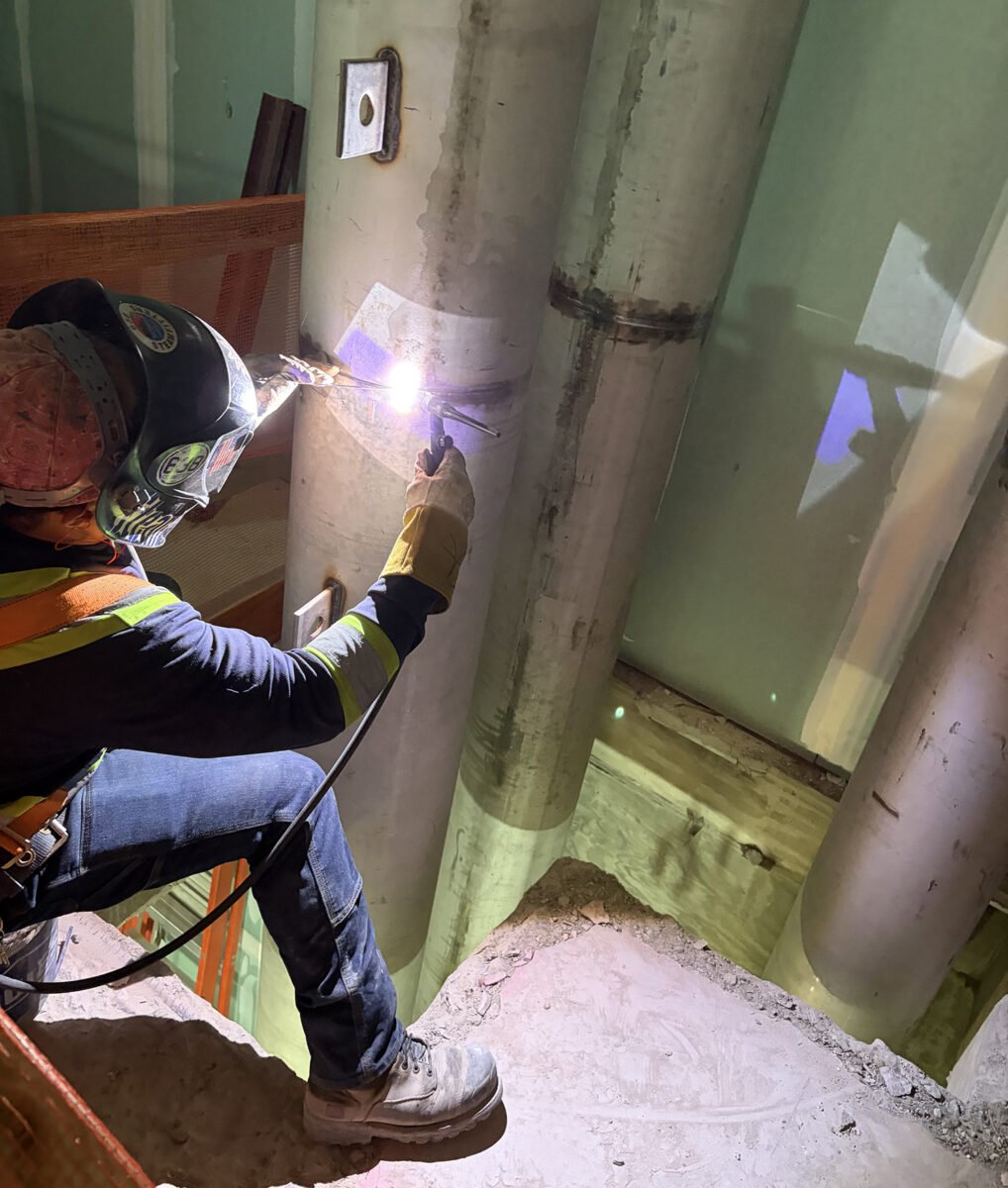
Jaccel & Heat Mechanical installs and services chilled water piping and refrigeration systems for general contractors, prime mechanical contractors, and institutional facilities across New York City, Nassau County, and Suffolk County. We work on commercial cooling infrastructure for hospitals, transportation facilities, government buildings, and large commercial developments. All work is performed by Local 638 steamfitters with the technical training and field experience these systems demand.
Chilled Water Systems
Chilled Water Piping Systems: What the Work Involves
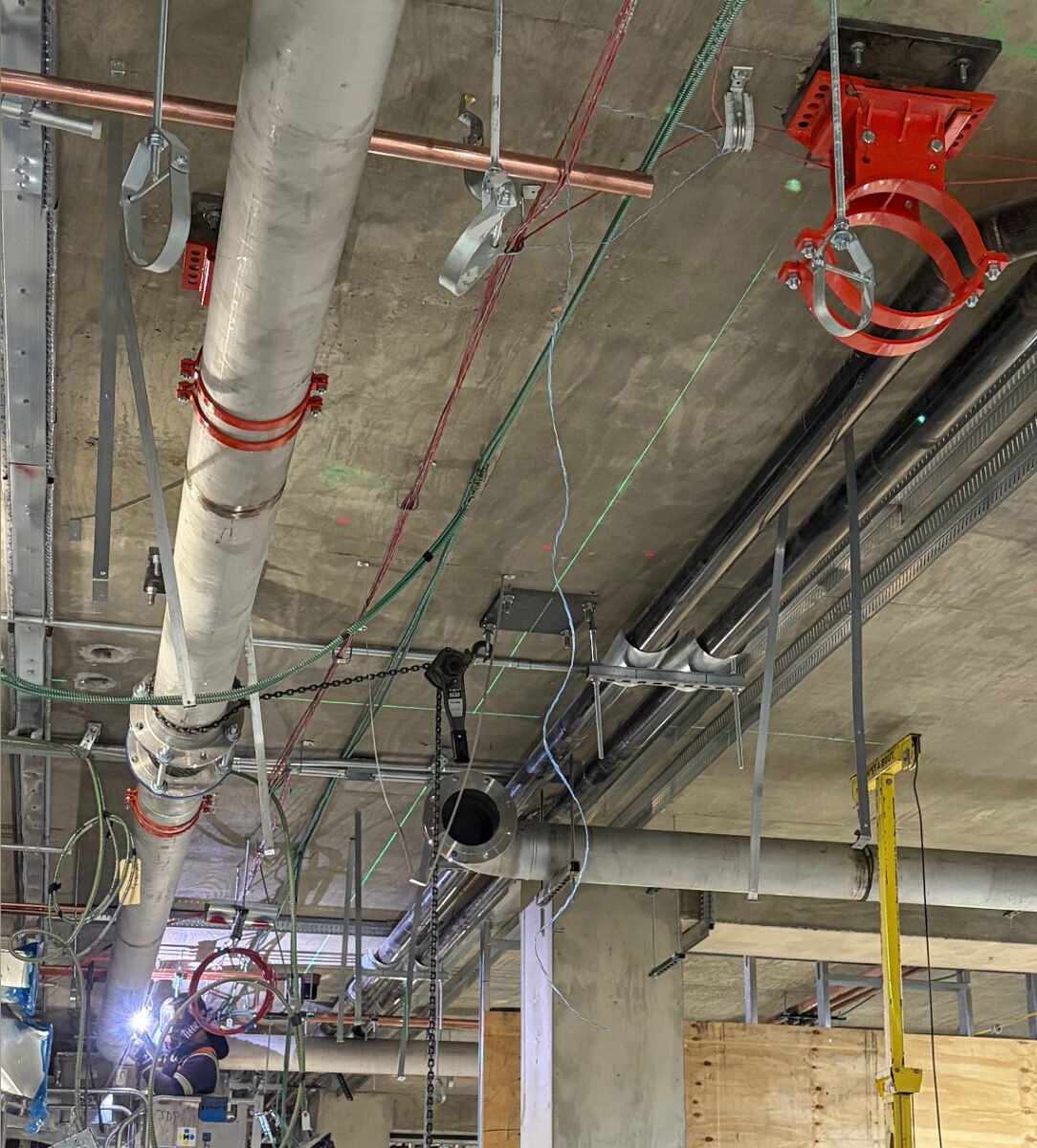
A chilled water system is one of the more complex mechanical installations on a commercial job. Water is cooled at a central chiller plant and distributed through supply and return piping to air handling units and fan coil units throughout the building. The piping has to be sized correctly, insulated properly to prevent condensation, and balanced to deliver design flow rates to every terminal unit.
We handle the full scope of chilled water piping installation: primary and secondary distribution mains, branch piping to air handling units, expansion tanks, air separators, strainers, and the full valve and specialty package, on new construction and existing buildings alike.
Refrigeration
Refrigeration Systems for Commercial and Industrial Facilities
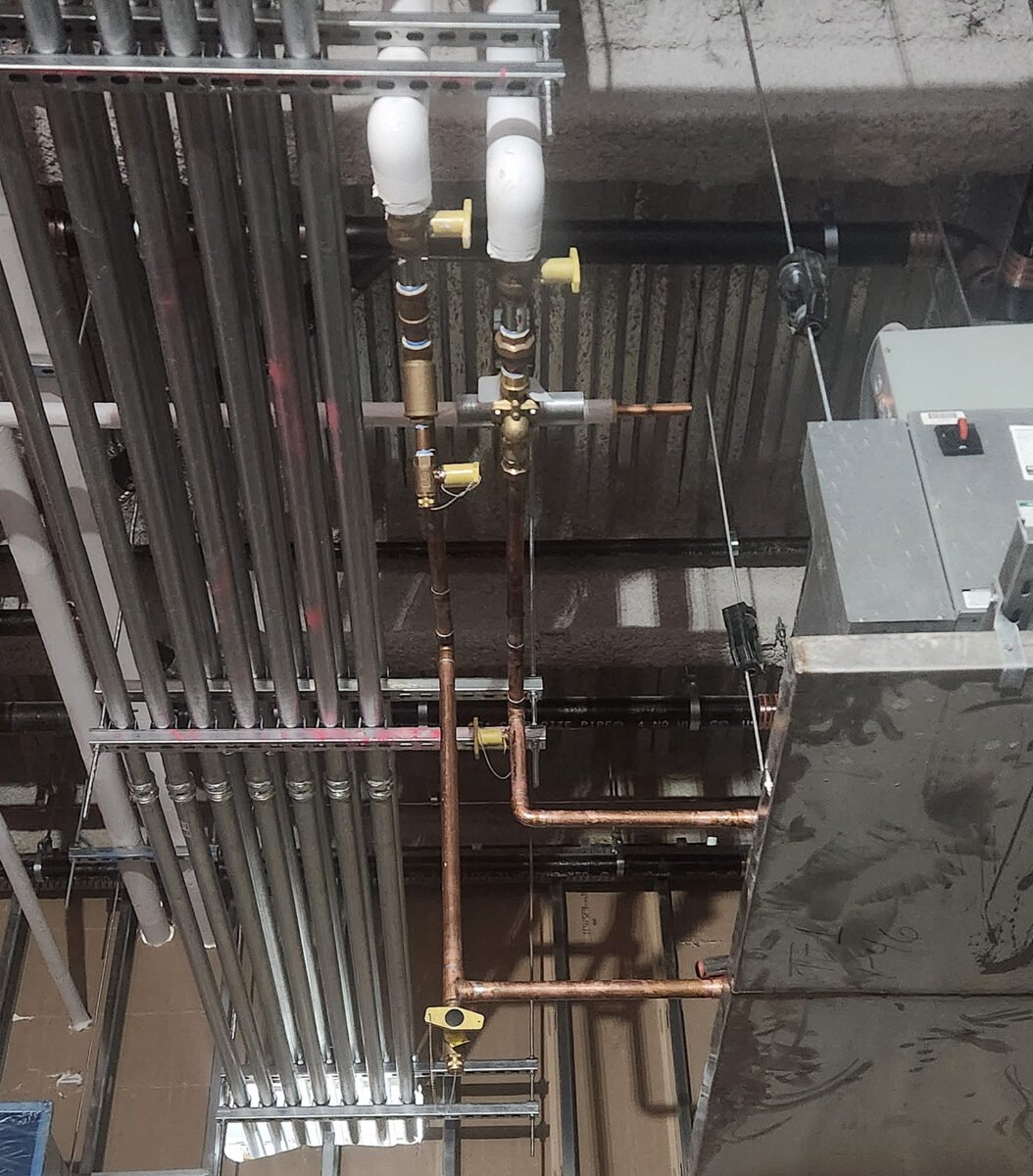
Commercial refrigeration is a different discipline from chilled water, and the two are often confused. Refrigeration systems use refrigerant rather than water as the heat transfer medium, operating at much lower temperatures and higher pressures than a typical chilled water circuit, with applications ranging from commercial kitchen and food storage refrigeration to industrial process cooling and pharmaceutical storage.
We install and service refrigeration systems for commercial and industrial clients across New York, with crews who understand refrigerant handling requirements, pressure testing and leak detection, and NYC compliance standards.
Union Labor
Cooling Infrastructure for New York's Most Demanding Facilities
Large commercial and institutional buildings put serious demands on cooling systems. A hospital has to maintain precise temperature and humidity in operating rooms and patient areas around the clock. A data center can’t tolerate cooling failures for even a few minutes. Jaccel & Heat works exclusively in commercial and institutional environments, and coordinates our work within the tight scheduling and compliance constraints these facilities operate under.
We are a Local 638 union shop, a New York State Certified Minority Business Enterprise (MBE), and a Port Authority of NY & NJ Certified Small Business Enterprise (SBE), a qualified and credentialed partner for projects with union or minority business participation requirements.
FAQs
Frequently Asked Questions
Primary-only vs. primary-secondary chilled water systems: which is right for your building?
A primary-only system uses a single set of pumps to circulate chilled water through both the chiller and the distribution system. A primary-secondary system decouples chiller flow from distribution flow using a bypass bridge, allowing chillers to operate at constant flow while distribution pumps modulate to match building load. Primary-secondary systems are more complex and more expensive to install, but they give the building operator better chiller efficiency and more flexibility in partial-load conditions. For large facilities with variable occupancy loads, the operational savings typically justify the added installation cost. For smaller, constant-load applications, primary-only is often the right call.
What are NYC's refrigerant handling and compliance requirements?
Commercial refrigeration work in New York City involving refrigerants requires EPA Section 608 certification for technicians handling refrigerants. Certain refrigerants are subject to phase-out schedules under federal regulations, which affect equipment selection on new installations. New York City also has Local Law 97 implications for refrigerant systems in larger buildings, particularly around the global warming potential of refrigerants used. Our crews are certified and current on refrigerant compliance requirements.
How is chilled water piping insulation specified, and what happens if it's wrong?
Chilled water piping insulation is specified based on pipe diameter, operating temperature, and location per the NYC Energy Conservation Code. The insulation must include a vapor barrier rated for the dew point conditions at the pipe surface to prevent condensation. Inadequate insulation thickness or a compromised vapor barrier leads to condensation on the pipe exterior, which causes corrosion, mold growth in the ceiling plenum, and eventual pipe failure. It’s one of the more common installation shortcuts that shows up as a warranty callback years later.
What causes chilled water flow imbalance, and how is it identified?
Flow imbalance in a chilled water system is usually the result of improper pipe sizing, missing or incorrectly set balancing valves, or design changes during construction that weren’t fully coordinated through the piping layout. It shows up as hot spots in the building, overloaded air handling units, and excessive chiller runtime. Identification requires flow measurement at terminal units using ultrasonic flow meters or differential pressure readings across balancing valves. Correction involves hydraulic balancing and, in some cases, pipe modifications where the original sizing was inadequate for the actual load.
How does chilled water system commissioning work, and what should a GC expect?
Commissioning a chilled water system involves pressure testing the piping before insulation is applied, flushing the system to remove construction debris, chemical treatment of the system water, and final hydraulic balancing once the building is in a condition to run the system under load. The mechanical contractor coordinates with the controls contractor and the commissioning agent to verify that the system is performing to design intent. GCs should expect the commissioning process to take several days on a large system and should build that time into the project schedule rather than treating it as an afterthought.
Contact
Ready to Talk About Your Next Project?
From a single boiler installation to a full mechanical room build-out, Jaccel & Heat is the mechanical contractor NYC facilities call for HVAC, steam piping, and preventative maintenance work. We cover the five boroughs, Nassau, and Suffolk, on commercial, industrial, and institutional job sites alike. Tell us what you’re working on and we’ll get back to you fast.