
Services
Mechanical Room Installation Contractors in New York City for Commercial and Industrial Facilities
Jaccel & Heat Mechanical handles mechanical room installations and equipment setting for general contractors, prime mechanical contractors, and facility owners across New York City, Nassau County, and Suffolk County. We build out mechanical rooms from the ground up and work on existing facilities where equipment is being replaced, upgraded, or reconfigured. All work is performed by Local 638 steamfitters with the coordination skills and field experience these jobs demand.
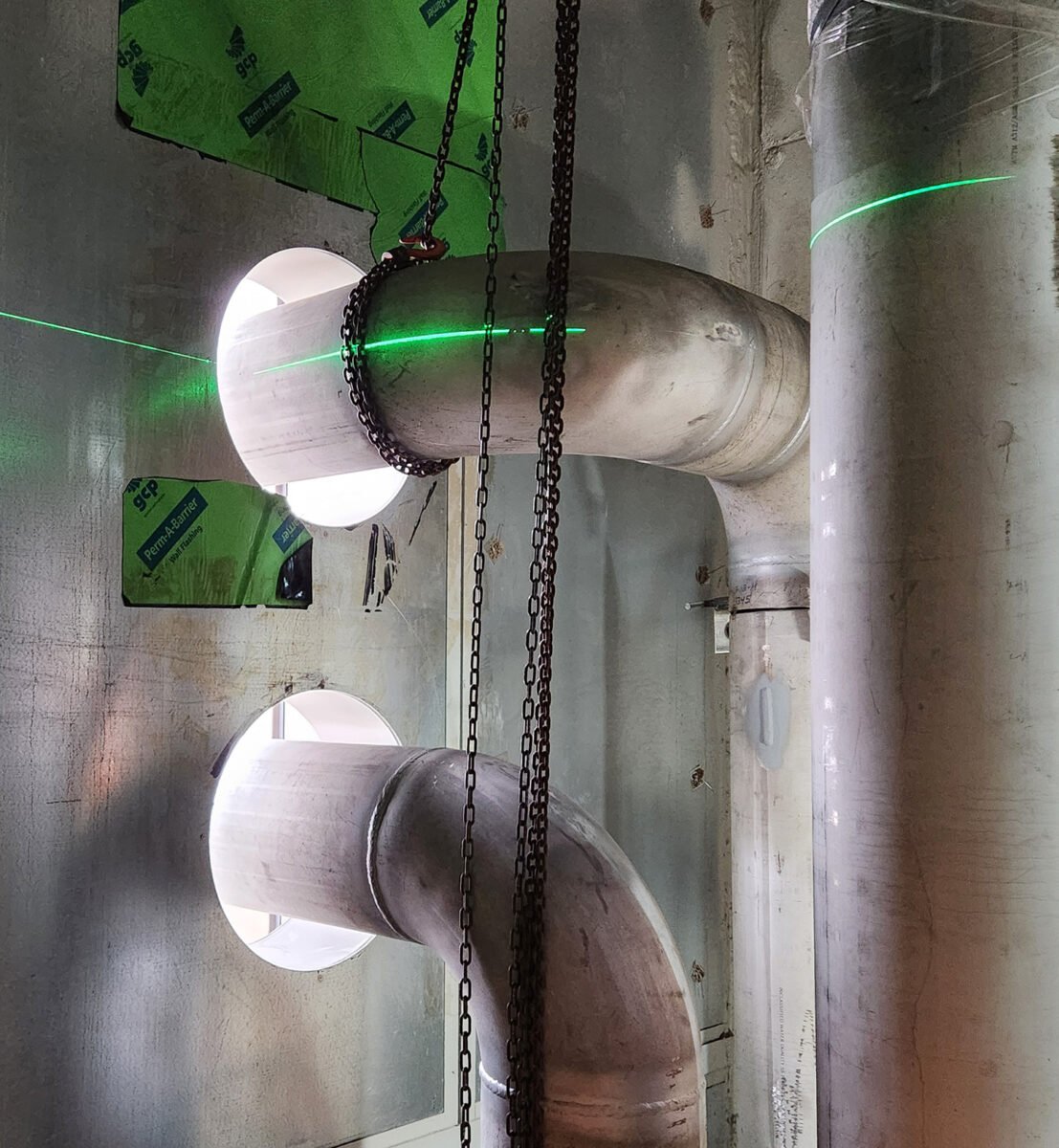
Mechanical Rooms
What Mechanical Room Installation Actually Involves
The mechanical room is where a building’s systems live: boilers, chillers, pumps, heat exchangers, air handling units, pressure vessels, and the piping and valving that connects it all. On new construction, it’s one of the most complex and heavily coordinated spaces on the project. On a renovation, it’s often the most constrained, with active systems that can’t be shut down and no room for error.
We handle the full scope of mechanical room work: equipment setting and alignment, pipe supports and hangers, primary piping connections, valve and specialty installations, expansion joints, and coordination with controls and electrical trades, from small rooftop equipment rooms to multi-story central plants.
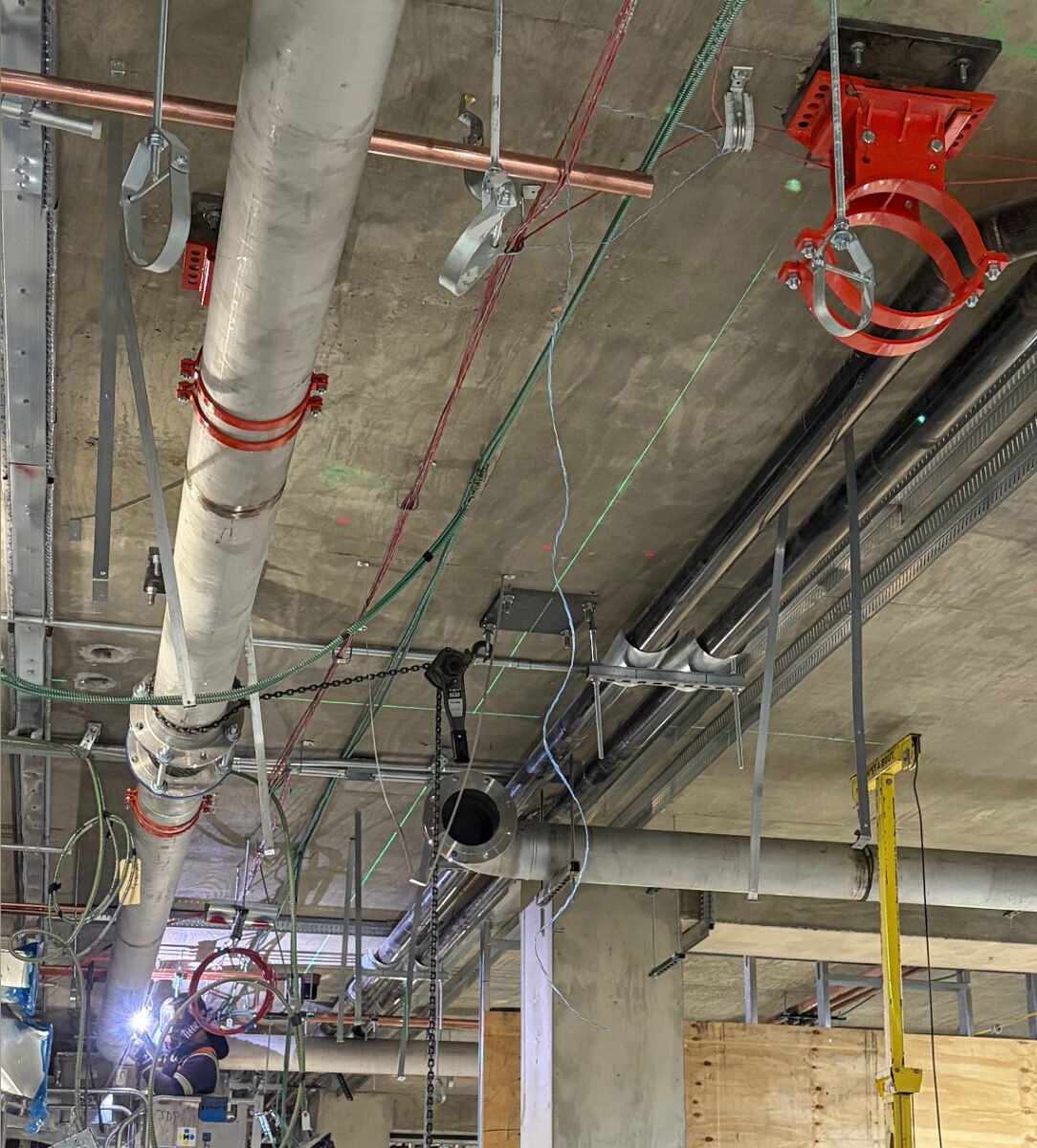
Equipment Setting
Equipment Setting for Commercial Mechanical Systems
Setting mechanical equipment correctly is the foundation everything else builds on. A chiller or boiler that isn’t level, properly isolated from vibration, or correctly aligned to its piping connections causes problems from day one, including noise complaints, premature bearing failure, and pipe stress at connections that trace straight back to the installation.
We set pumps, chillers, boilers, heat exchangers, air handling units, cooling towers, and pressure vessels, including grouting equipment bases, installing inertia pads and vibration isolators, aligning flexible connectors, and verifying maintenance clearances before pipe connections go in.
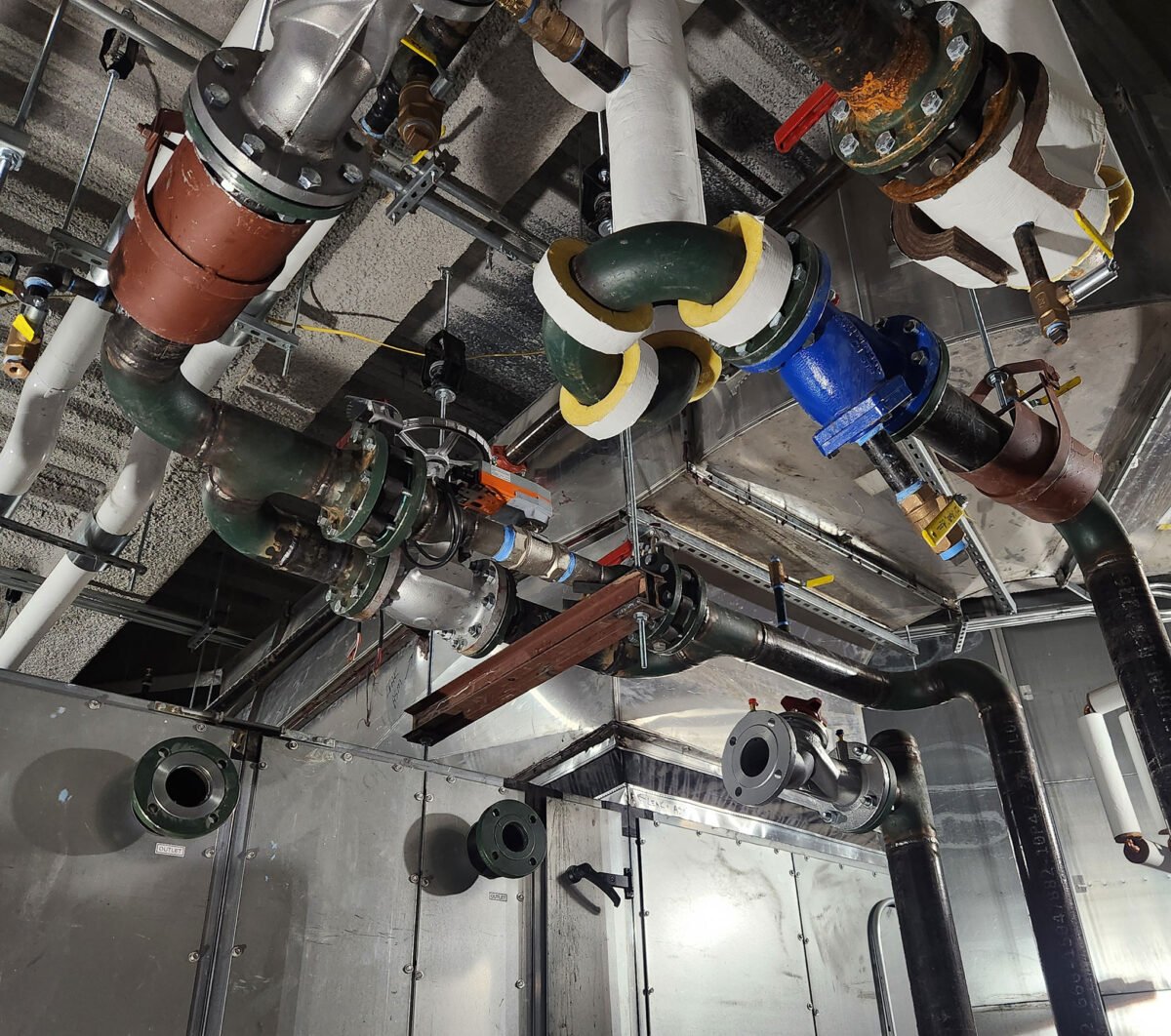
Pipe Supports & Valves
Pipe Supports, Hangers and Valve Packages
The mechanical room piping package is as important as the equipment itself. Improperly supported pipe creates stress at equipment connections, allows thermal movement to go uncontrolled, and fails inspections, and poorly arranged valve packages make a system difficult to operate and maintain.
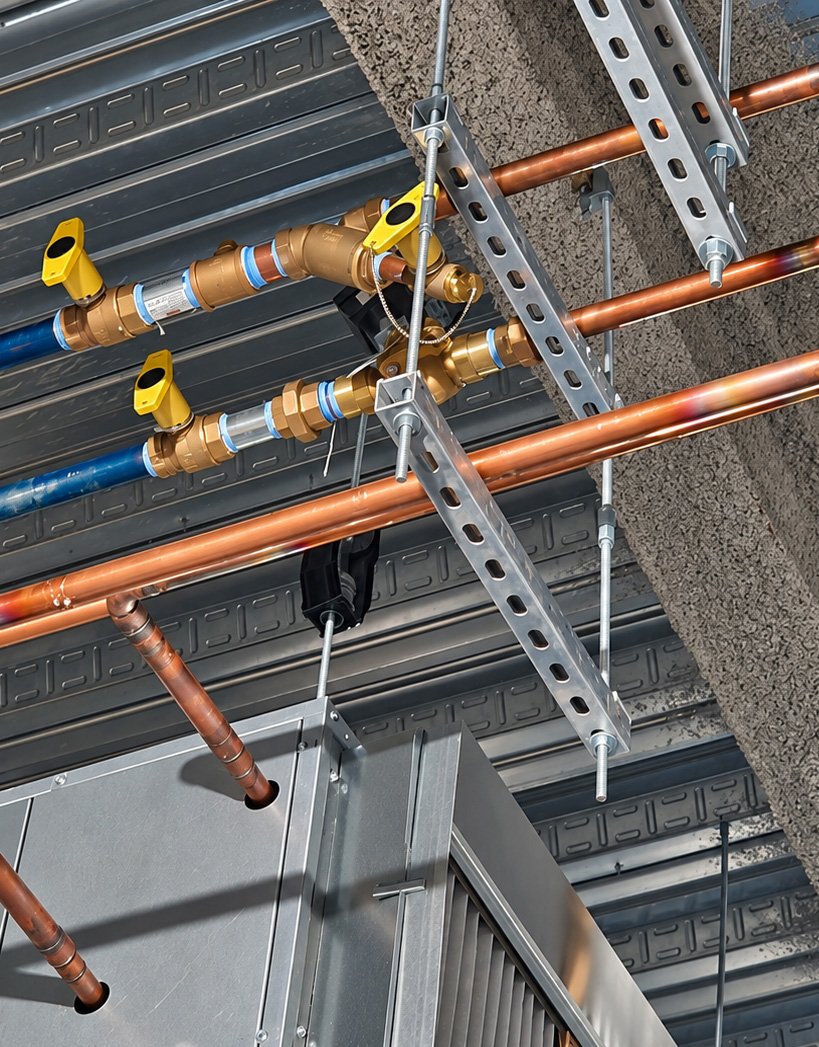
We install pipe supports and hangers to seismic and code requirements, engineered spring hangers where vibration isolation is specified, and the full valve and specialty package, including isolation valves, check valves, strainers, gauges, and flow meters, built to what the engineer specified.
FAQs
Frequently Asked Questions
What are NYC's seismic requirements for mechanical equipment and pipe supports?
New York City falls within a seismic design category that requires mechanical equipment and pipe supports in commercial buildings to be braced and anchored to resist seismic forces per ASCE 7 and the NYC Building Code. This applies to equipment weighing over 400 pounds and to piping above certain diameters, depending on occupancy category. Seismic restraint calculations are typically provided by the engineer of record or a specialty engineer and are submitted as part of the shop drawing package. The contractor is responsible for installing the restraints per the approved drawings and maintaining documentation for inspection. This is not an area where field improvisation is acceptable.
How is equipment setting coordinated with other trades on a mechanical room job?
Mechanical room coordination starts with BIM modeling and coordination drawings that resolve conflicts between disciplines before installation begins. Equipment setting is typically one of the first mechanical activities in a new mechanical room because structural embedments, housekeeping pads, and electrical rough-in all have to be in place before equipment arrives. Once equipment is set, controls rough-in follows the mechanical piping, and startup can’t happen until both mechanical and electrical connections are complete and the controls contractor has commissioned the equipment. The mechanical contractor has to stay ahead of the sequence and flag delays early because equipment setting delays cascade through every other trade.
What documentation is required for mechanical room installations in NYC?
Documentation requirements vary by facility type but typically include approved shop drawings for equipment and pipe supports, material certifications for piping and fittings, weld records where welding is performed, pressure test reports for piping systems, equipment startup reports from the manufacturer or factory-authorized technician, and commissioning documentation verifying system performance. Hospitals and healthcare facilities operating under Joint Commission standards have additional documentation requirements tied to facility management plans. Jaccel & Heat maintains installation records throughout the project and produces the documentation packages these facilities require at closeout.
How do you handle mechanical room work in occupied facilities that can't fully shut down?
Occupied facility work requires planning that starts well before the first tool hits the job site. We work with the facility manager to identify shutdown windows, sequence the work to minimize the duration of any outage, and install temporary bypasses or connections where a full shutdown isn’t possible. In hospitals, that means coordinating with facilities engineering and infection control. In commercial buildings, it means working nights or weekends if the facility can’t tolerate a daytime outage. The planning conversation has to happen early because the cost of an unplanned system outage in an occupied building is always higher than the cost of proper sequencing upfront.
What should a GC expect during mechanical room equipment startup?
Equipment startup in a mechanical room involves multiple parties: the mechanical contractor, the controls contractor, the equipment manufacturer or their authorized startup technician, and often the commissioning agent. The mechanical contractor is responsible for confirming that all piping connections are complete, the system has been flushed and chemically treated, isolation valves are in the correct position, and the equipment is ready to receive power before startup begins. The manufacturer’s startup technician verifies equipment operation and issues a startup report that is typically required for warranty activation. The GC’s role is to make sure all parties are coordinated and that the schedule allows adequate time for startup before the owner’s substantial completion deadline.
Contact
Ready to Talk About Your Next Project?
From a single boiler installation to a full mechanical room build-out, Jaccel & Heat is the mechanical contractor NYC facilities call for HVAC, steam piping, and preventative maintenance work. We cover the five boroughs, Nassau, and Suffolk, on commercial, industrial, and institutional job sites alike. Tell us what you’re working on and we’ll get back to you fast.